Origin & production
Salt-lake harvest, industrial precision
Sourced from 9 hypersaline lakes across 54,000 hectares in a protected biosphere basin, refined in primary producer facilities with 300 metric tons of annual capacity and HACCP controls.
Harvest
Shoreline collection at peak cyst maturity
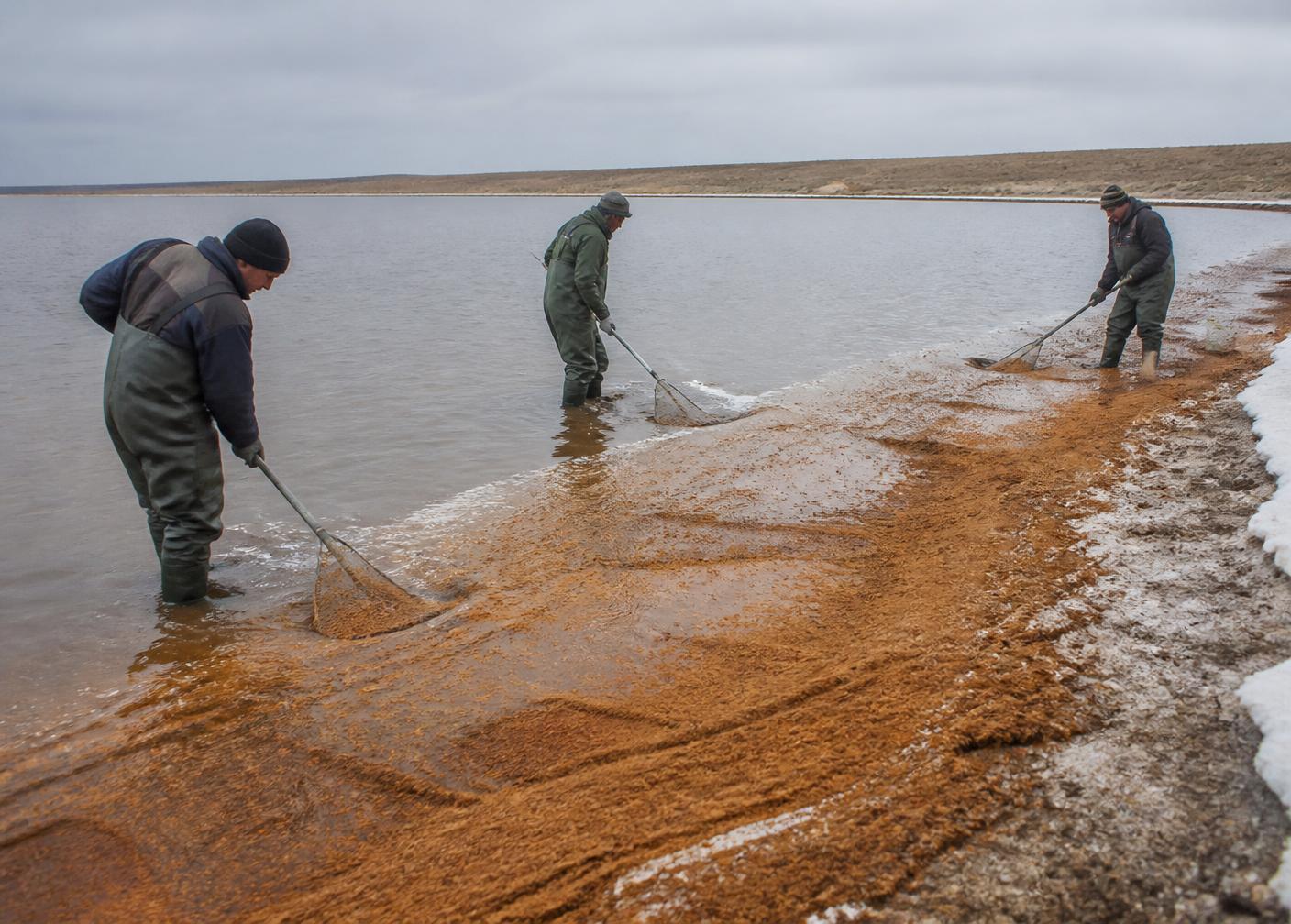
Cysts accumulate naturally along the windward shorelines of protected salt lakes. Trained harvest teams collect only mature, buoyant biomass at the right moisture window, then move it to chilled holding within hours to stop embryonic degradation.
- • No agricultural, mining or industrial discharge upstream of the harvest basin.
- • Salinity and cyst-density monitoring across each lake through the season.
- • Harvest lots kept traceable from shoreline sector to final export drum.
- • Seasonal capacity planning so no lake is over-harvested.
8-stage process
Each stage protects embryonic viability
Processing is where hatch rate is won or lost. Our sequence separates, grades and activates cysts without heat-shocking the embryo.
- 1Stage 1
Hypersaline Lake Harvesting
Harvested during natural seasonal concentration along the shorelines of 9 protected hypersaline salt lakes using gentle nets and selective skimming.
- 2Stage 2
Cold-Chain Transportation
Rapid transit to processing facilities in temperature-controlled refrigerated trailers maintained at 0°C to +10°C to preserve embryonic dormancy.
- 3Stage 3
Inbound Laboratory Verification
Comprehensive batch intake analysis: moisture content, purity screening, cyst fullness index, and baseline 24-hour test incubation.
- 4Stage 4
High-Density Saline Wash & Silt Separation
Multi-stage brine washing and calibrated vibrating mesh screens (100–150 μm) separate 99.8% of organic silt, algae, and mineral sand.
- 5Stage 5
Industrial Centrifugal Dewatering
Centrifugation reduces cyst moisture to 25–30% within 5–10 minutes, preventing fungal/bacterial proliferation.
- 6Stage 6
Precision Thermal Activation
Controlled thermal priming breaks diapause, synchronizing hatching dynamics and elevating hatch rates up to 95%.
- 7Stage 7
Freshwater Rinsing & Low-Temp Drying
Triple demineralized freshwater rinses followed by vacuum/convection drying under 40°C to achieve optimal moisture (≤6–8%).
- 8Stage 8
Nitrogen-Flushed Hermetic Packaging
Automated vacuum packaging with nitrogen gas barrier in metal cans and multi-layer foil bags for 24–60 month shelf stability.
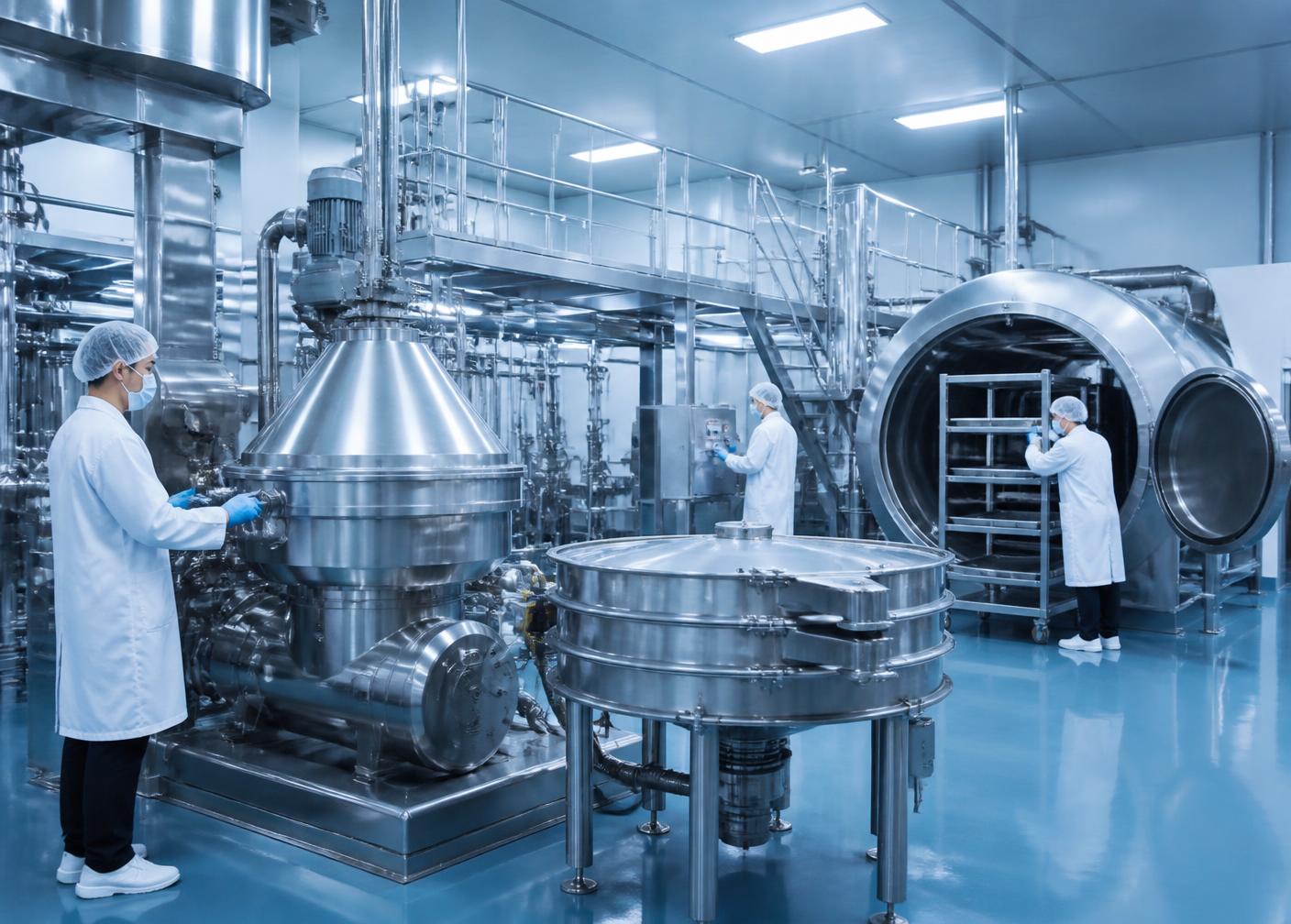
Facility & biosecurity
HACCP control from intake to seal
Every critical control point is documented: brine density, drying temperature, residual moisture, foreign-matter removal and packaging atmosphere.
Controlled low-temperature drying
Moisture is pulled to ≤ 6.0–7.5% without exceeding the thermal limit that denatures hatching enzymes.
Density and sieve grading
Brine flotation plus calibrated sieves separate viable cysts from empty shells, sand and organic debris to reach ≥ 99.5% purity.
Nitrogen-flushed packaging
Vacuum sealing and nitrogen flushing keep oxygen away from the embryo, giving multi-year shelf stability under cold storage.
Full lot traceability
Harvest sector, processing run, lab results and shipment documents share one lot number.